


The morning commute down Hurontario or the QEW is demanding enough on a good day. Add in the fatigue of the first trimester, and the urge for caffeine becomes less of a want and more of a survival instinct. For thousands of women in Mississauga, coffee is the engine that keeps the day moving. But the moment a pregnancy is confirmed, that daily fuel source suddenly feels like a potential threat.
The worry sets in fast. Everyone has an opinion. Friends, relatives, coworkers, they all weigh in. One swears she quit cold turkey. Another claims she drank three cups a day, and her kids are fine. The internet is worse, offering fear instead of facts. The real answer about coffee during pregnancy isn’t about picking a side. It’s about biology.
The Biological Reality
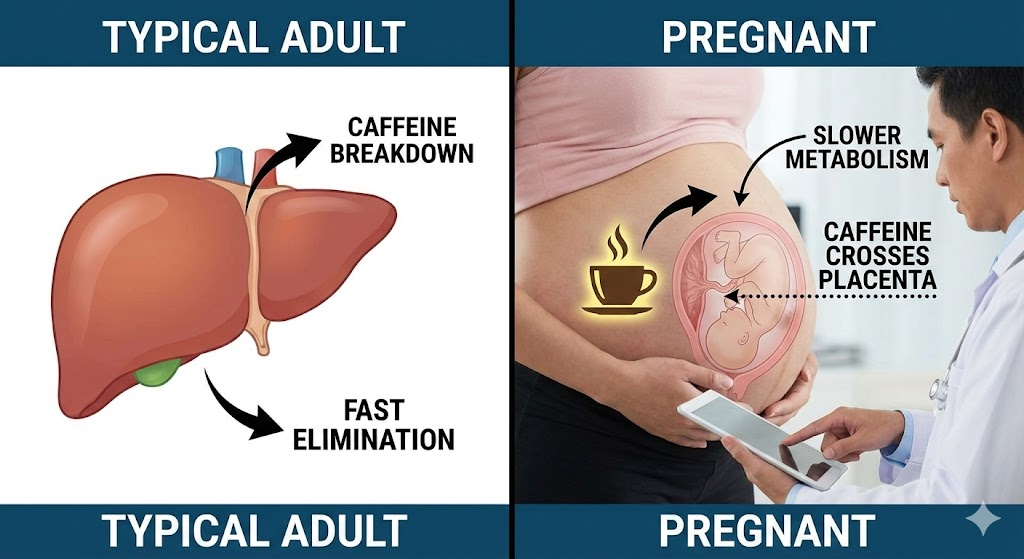
Safety limits depend on what happens after you take a sip. In a typical adult, the liver works efficiently. It produces enzymes that break caffeine down, use the energy, and flush the rest. The system is fast.
Pregnancy changes the rules. As the weeks go by, metabolism slows down. The body takes much longer to process caffeine. By the third trimester, the chemical stays in the blood nearly three times longer than normal.
The placenta adds another layer of complexity. It acts as a gateway. Caffeine crosses it easily, moving from mother to baby. The developing fetus doesn’t have the liver enzymes to handle it. It relies entirely on the mother’s system to clear the drug. When the mother’s metabolism is slowed by coffee during pregnancy, the baby ends up exposed to caffeine for hours. That prolonged exposure is what doctors watch, as it can influence fetal heart rate.
The 200mg Threshold
So, is coffee safe in pregnancy? Medical consensus says yes. But there’s a catch. Limits matter.
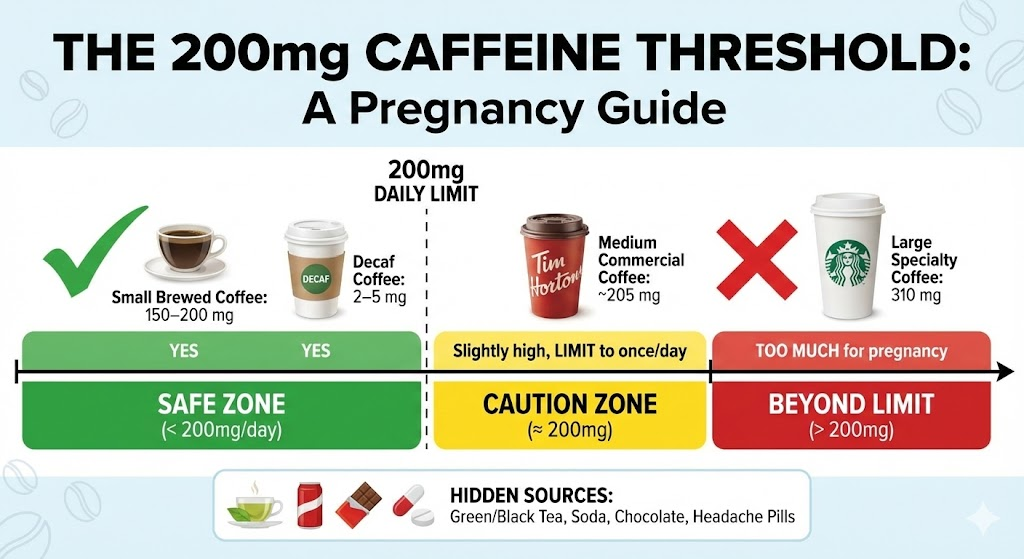
Most obstetrics organizations set the line at 200 milligrams a day. Staying under this number generally avoids the risks linked to complications like preterm birth. Practically, 200mg is about one standard 12-ounce cup brewed at home.
The definition of a cup is the problem. A medium roast from a drive-through on Derry Road isn’t standardized. Some large commercial coffees pack over 300mg into a single serving. One drink pushes you past the safety zone before noon. Also, caffeine in pregnancy hides in other places. Green tea, black tea, soda, chocolate, headache pills, they all count. Swap coffee for five cups of tea, and the total intake might actually go up.
Most Mississauga doctors including those at family clinics and walk-in clinics near Square One, give patients the same guideline: one cup of coffee per day is generally safe.
Here’s what that looks like:
| Coffee Type | Approx. Caffeine | Safe? |
|---|---|---|
| 1 small brewed coffee | 150–200 mg | Yes |
| 1 medium Tim Hortons coffee | ~205 mg | Slightly high, limit to once/day |
| 1 Starbucks Grande | 310 mg | Too much for pregnancy |
| Decaf coffee | 2–5 mg | Safe |
If you love cafe style coffee, be mindful: specialty drinks often contain more caffeine than you think.
The Miscarriage Question
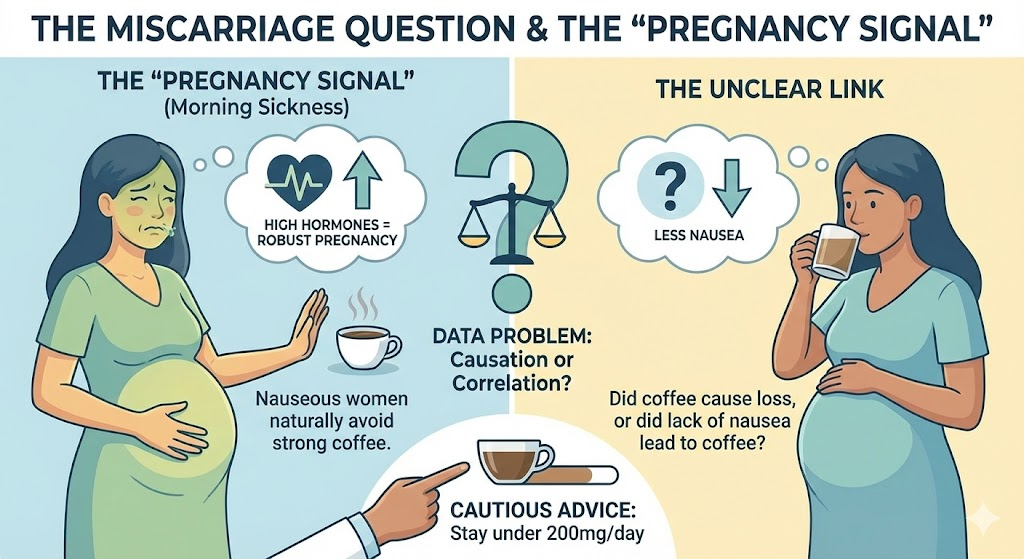
Fear of pregnancy loss drives most of the anxiety. We’ve been told for years that coffee causes miscarriages. The data is messier than that.
Some studies featuring coffee during pregnancy do link high intake to loss. But researchers have found a statistical quirk called the pregnancy signal. Morning sickness usually means hormone levels are high and the pregnancy is robust. Nauseous women naturally stop drinking strong coffee.
This creates a data problem. It leaves a big question mark, were miscarriages caused by the coffee itself, or did those women simply keep drinking it because they never developed strong pregnancy nausea? Right now, the research can’t clearly separate the two. That’s why the advice stays cautious. Trying not to exceed 200mg is the safest bet.
Growth and Birth Weight
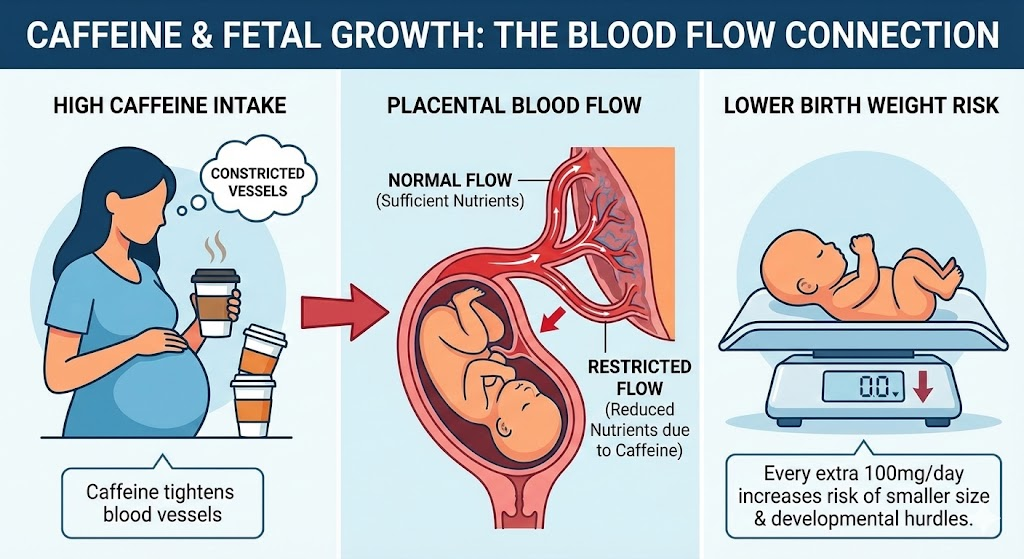
The link to birth weight is clearer. Evidence from different research groups points in the same direction: high caffeine habits aren’t ideal for fetal growth. Because caffeine tightens blood vessels, due to which the placenta receives slightly less blood flow. With every extra 100 mg a day, the odds of affecting fetous growth increase.
Every extra 100mg of daily caffeine raises the risk of a lower birth weight. A slightly smaller baby isn’t always a crisis. But low birth weight can signal other developmental hurdles.
Finding Local Support
Navigating these choices is part of prenatal care Mississauga offers. Every pregnancy is different. A mom with high blood pressure gets different advice than one with low pressure. Generic web searches can’t account for that.
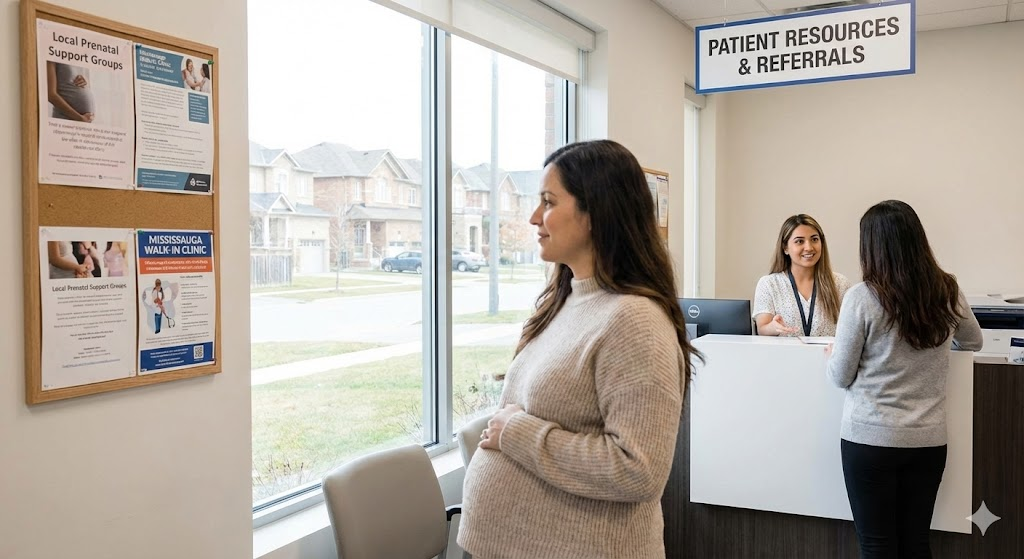
Finding doctors in Mississauga who accept new patients is tough. Waitlists are long. But don’t wait for a permanent family doctor to get answers. A walk-in clinic in the Mississauga facility can fill the gap. These clinics verify pregnancies, offer initial advice on diet, and handle referrals. They are a solid starting point.
Good Women’s Health Care means making decisions based on your health history, not just rules you read online.
Cutting Back Without Misery
For the woman who runs on three espressos a day, the 200mg limit sounds painful. Withdrawal headaches and irritability are the last things you need when you’re already tired.
Don’t quit cold turkey. It usually fails. Try dilution. Mix half decaf and half regular beans. You keep the ritual of two cups, but reduce the caffeine in half. Or switch to lattes. A latte is mostly milk. You get calcium and protein, with a much smaller volume of coffee.
Hydration matters too. Pregnancy demands huge amounts of water. Often, that 3 PM crash is dehydration, not a caffeine deficit. Drinking a glass of water before reaching for the mug can fix the energy slump.
Local Resources for Expectant Mothers
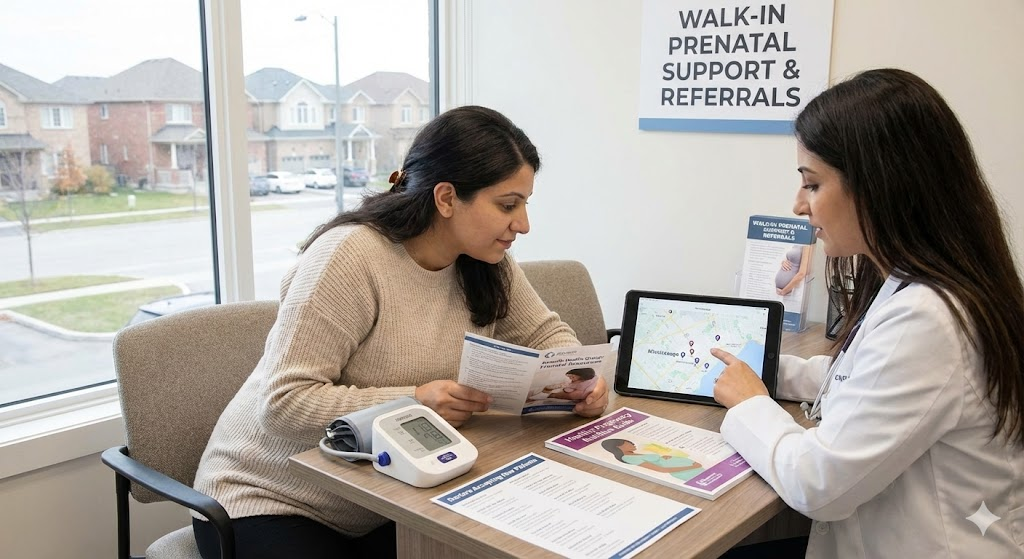
Pregnancy nutrition advice differs for every women. In Mississauga, prenatal teams look at each person’s full health picture before giving guidance. Someone with high blood pressure, for example, will be coached differently than someone whose readings run low, which is why broad online tips can only take you so far.
If you’re searching for doctors in Mississauga accepting new patients, there are multiple family practices available across the city. Women should not wait until they have a permanent family doctor to seek advice. A walk-in clinic, Mississauga facility like Aboudh Health Group can often bridge the gap. These clinics can confirm pregnancy, offer initial counseling on diet and medications. Also, further help with referrals to obstetricians.
Connect with our Mississauga prenatal care provider today
Questions about coffee, diet, and “what’s still safe” in pregnancy rarely come with simple yes‑or‑no answers. That’s exactly where Aboudh Health Group steps in. Instead of leaving patients to sort through mixed messages online, the team takes time to look at the full picture. Starting from medical history, blood pressure, symptoms, and everyday routines, before offering practical guidance.
Aboudh Health Group focuses on clear explanations and realistic plans. From reviewing caffeine habits to shaping a complete prenatal care strategy, the goal is always the same. Healthy pregnancies, confident decisions, and support that feels personal.
For patients who want more than a quick search result, booking a visit with Aboudh Health Group offers a chance to interactwith our professionals and look forward to a healthy growing foetus.
Faqs
Most doctors consider up to about 200 mg of caffeine a day (roughly one regular cup of coffee) safe for a healthy pregnancy, as long as total caffeine from tea, soda, energy drinks, and chocolate is also counted.
Caffeine crosses the placenta and stays in a baby’s system much longer than in an adult. Because it narrows blood vessels slightly, it can reduce the flow of oxygen and nutrients reaching the placenta when intake is high.
High daily caffeine intake has been linked in some studies to a higher risk of miscarriage and lower birth weight, especially above 300 mg a day. Keeping intake under 200 mg is generally recommended to stay on the safe side.
Most people do not need to quit entirely. Many women switch to smaller cups, half‑caf, or decaf so they can still enjoy the routine while staying within the recommended daily limit and supporting healthy fetal growth.
Questions about coffee, medications, and diet in pregnancy are best reviewed with a prenatal provider. A family doctor, OB‑GYN, prenatal care Mississauga clinic, or a walk-in clinic Mississauga location can review your specific health history and give personalized guidance.