

Antenatal Depression: How Depression During Pregnancy Can Affect Your Baby’s Development

Pregnant woman at prenatal checkup with doctor support and fetal health illustration

Pregnancy changes everything about a woman’s life. The body shifts, emotions run high and low, and everyone expects constant joy. But for many, antenatal depression commonly known as depression during pregnancy arrives before you realize it. This isn’t just feeling down occasionally. The body and brain are under real strain. Hormonal swings and stress responses can overwhelm natural coping systems. Professional support helps stabilize things sooner. This blog explains why antenatal depression deserves medical care and how timely support can make a real difference. 


Distinguishing Antenatal Depression from Common Mood Shifts

Side-by-side graphic comparing common pregnancy mood shifts (baby blues) with signs of antenatal depression

Postpartum depression is widely recognized, but depression can start much earlier. The baby blues are a brief emotional phase tied to hormones and exhaustion, not a long-term condition. Antenatal depression works differently. It builds slowly through the first or third trimester and sticks around, making everyday tasks feel overwhelming.


Women often describe a constant gray cloud hanging over them. Simple joys like feeling the baby kick or planning the nursery lose their spark. Worry takes over, outlines the effects of depression in pregnancy on the baby, concerning the baby’s health, birth complications, or even managing life afterward. Bodies react too. Some lose appetite completely and drop weight. Others crave comfort food and gain too much. Sleep doesn’t restore you anymore. Fatigue clouds your thinking, your body reacts with ongoing discomfort, and troubling thoughts creep in.


What’s happening is physical, not moral. Hormonal changes and stress interact with personal history, affecting how the brain functions. Treatment works better than simply waiting for it to pass.


Prevalence Statistics: A Global and Local Perspective
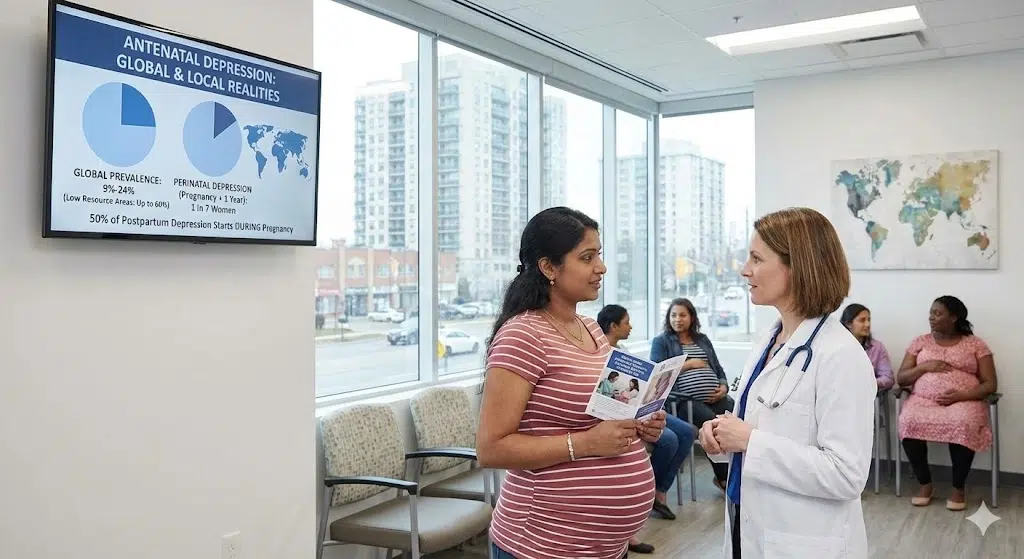
Prevalence Statistics: A Global and Local Perspective

The numbers surprise most people. Around 9% to 24% of pregnant women worldwide deal with antenatal depression. That range depends on where studies happen and how they measure it. In areas struggling with poverty, poor nutrition, or little medical access, rates shoot up to 60%. Looking broader at perinatal depression – pregnancy plus the first year after birth affects roughly 1 in 7 women. Here’s the twist: about 50% of what doctors call postpartum depression actually starts during pregnancy. Symptoms brew unnoticed, then explode after delivery, catching everyone off guard.


Canada sees similar patterns, especially in growing cities like Mississauga. New immigrants face language hurdles and isolation. Working moms juggle jobs through morning sickness. Single parents stretch finances thin. These pressures stack up. That’s why prenatal checkups now include real talk about emotions, not just blood pressure and baby measurements. Spotting it early cuts off problems before they grow.


Fetal Programming: The Intricate Womb-to-World Connection
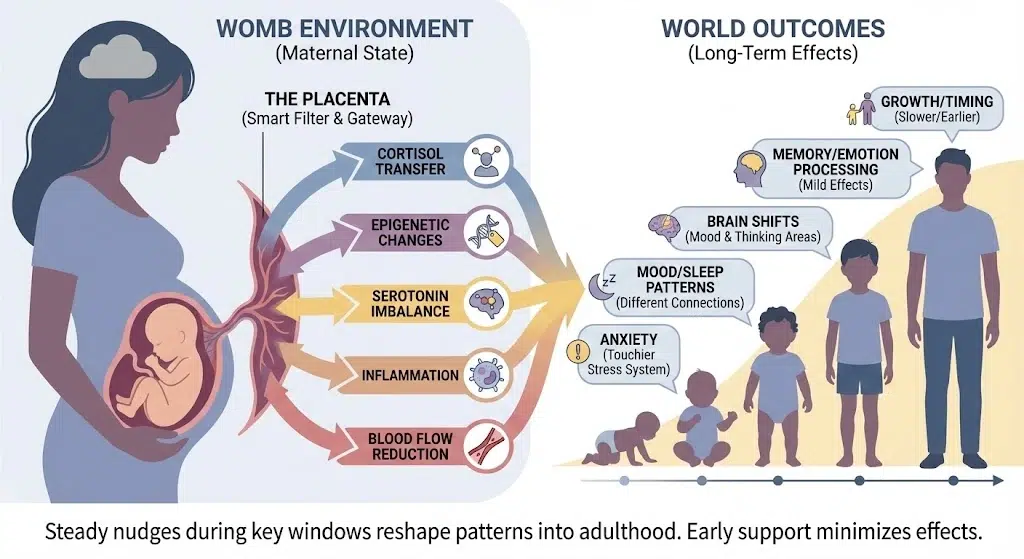
Infographic showing how maternal stress affects the placenta and may influence child development, mood, sleep, and long-term outcomes

Science calls this connection fetal programming. The basic idea holds that conditions inside the womb don’t just feed the baby, they set patterns for stress handling, brain growth, and even metabolism that last into adulthood. The placenta acts like a smart filter most of the time. But when depression lingers, it lets through extra stress hormones, wonky serotonin signals, bits of inflammation, and dips in blood flow. Nothing hits like a hammer. These act more like steady nudges, reshaping things bit by bit during key growth windows.


Here’s how the main pathways break down:

Biological Pathway What’s Happening Potential Long-Term Effects
Cortisol Transfer Stress hormone overloads the placenta’s cleanup enzyme, letting extra through Baby’s own stress system wires up touchier, leading to more anxiety as a child
Epigenetic Changes Special tags get added to DNA in the placenta and cord blood Brain areas for feelings and thinking shift slightly in how genes turn on or off
Serotonin Imbalance Less of this key chemical reaches the fetus during late brain building Early nerve connections form a touch differently, showing in mood or sleep patterns
Inflammation Mom’s immune signals slip across and stir fetal brain cells Mild swelling affects memory centers and emotion processing down the road
Blood Flow Reduction Stress tightens womb blood vessels, cutting oxygen and nutrients slightly Higher chances of slower growth or arriving a bit early

Taken together, experts figure these prenatal factors tie to 10-15% of later issues like emotional ups and downs or small learning hurdles. Good news – the changes stay small to medium sized. Help the mom early, and they barely register.


Comprehensive Evidence on Child Development Outcomes
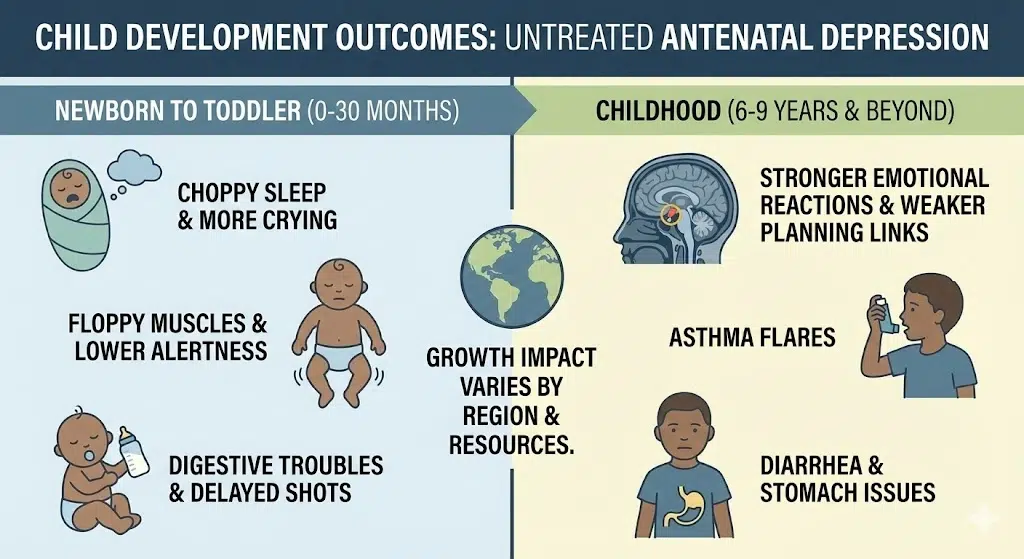
Infographic showing child development outcomes of untreated antenatal depression from newborn to childhood

Studies paint a clear picture from birth onward. Newborns from untreated antenatal depression cases often show specific patterns. They tune out repeated noises or lights more slowly, a sign of weaker sensory filtering. Alertness dips, with less focus during awake times. Muscles stay looser than average, making movements seem floppy. Sleep comes in choppy bursts rather than deep stretches. Crying ramps up, especially between 3-6 months, with 1.9 times higher odds of long, hard-to-stop spells.


As kids grow, brain scans tell more. Around ages 6-9, the amygdala, that emotional hotspot  reacts stronger to angry or sad faces. Links between it and the planning part of the brain weaken, trying to jump heart rates under stress. Girls tend toward bigger right-side amygdala areas; boys show milder shifts. On the health front, asthma flares more. Tummy troubles like diarrhea double in some studies. Colic drags on nightly. Shots get delayed, with 1.3 times the relative risk. By 30 months, sleep fights, resisting bed, trouble settling, nightmares carry 1.4 odds ratio. SIDS cases link back to maternal depression in 9% versus just 2% in others.


Growth tells different stories by location. Wealthier places show almost no connection. Poorer regions see three times higher stunting or low weight risks, pointing to money and care as big protectors. Findings mix on walking milestones, making friends, or forming strong bonds with parents study differences muddy those waters.


Practical Screening and Diagnostic Frameworks


Doctors keep it simple with the Edinburgh Postnatal Depression Scale (EPDS). Ten quick questions cover mood, anxiety, enjoyment of life, and darker thoughts. Score 13 or higher, and follow-up happens right away. The American College of Obstetricians and Gynecologists pushes for checks at the first visit, around 28-32 weeks, and again after birth. Canada follows suit.


Mississauga makes access easy. Walk-in clinics in Mississauga and doctors in Mississauga accepting new patients build EPDS into women’s health and prenatal care. Walk in, answer honestly, walk out with a plan with no weeks of waiting.


Multifaceted Treatment Strategies: From Therapy to Pharmacology
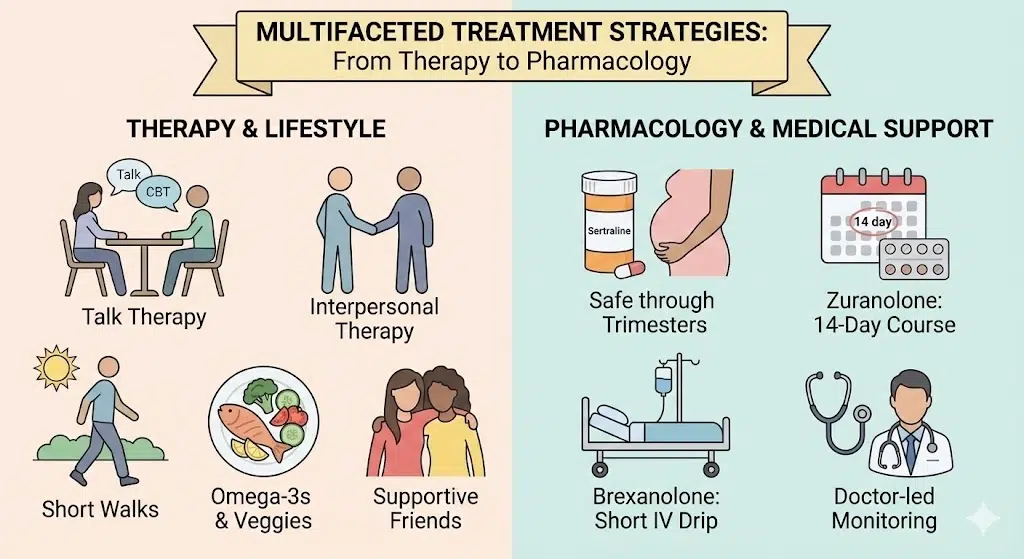
Infographic of antenatal depression treatments, including therapy, lifestyle changes, and medication options with doctor monitoring

Help matches the situation. Milder symptoms respond best to talk therapy. Cognitive Behavioral Therapy unpicks negative thinking loops with practical exercises. Interpersonal Therapy fixes strained relationships that feed the depression. Everyday boosts help too: short walks for fresh air, meals packed with omega-3s and veggies, time with supportive friends.


When depression runs deeper, medications enter the picture. Sertraline tops lists for safety through all trimesters. Years of data track thousands of pregnancies with few issues, babies adjust quickly after birth if needed. Fresh options shine brighter. Zuranolone comes as a 14-day pill course, calming brain signals fast for lasting relief. Brexanolone uses a short IV drip in hospital, cutting symptoms dramatically in days. Doctors mix approaches therapy plus meds, plus partner sessions watching closely every step.


Support during pregnancy matters. Reach out now!


Effects of depression in pregnancy on the baby and prenatal depression and baby development matter enough to watch closely. But no one should panic. Changes come small to moderate, heavily shaped by quick care and strong support around mom. Left alone, depression feeds into bigger troubles for both. Handled well, outcomes match healthy pregnancies perfectly.


Women in Mississauga hold advantages. At Aboudh Health Group, Our Walk-in clinic in Mississauga specialize in women’s health and prenatal care, ready with screening, counseling referrals, or prescriptions same day. Taking that first step protects the pregnancy journey, building strength for mom and the little one on the way. Contact us now!

Faqs

Antenatal depression is serious clinical depression that starts during pregnancy, not after. Normal pregnancy moods or baby blues are short-lived from hormone drops and tiredness, gone in days. This lingers weeks, bringing deep sadness, no energy for anything, sleep issues, and trouble functioning. Time to see a doctor, not just ride it out.

It can influence babies through stress hormones sneaking past the placenta, possibly messing with brain wiring, how they handle stress, or early crying/sleep patterns. Studies point to mild effects like extra fussiness, but nothing major. The best part? Getting mom treated early fixes most of it for both of you.

Watch for sadness that sticks around, nonstop worrying, exhaustion way past normal pregnancy tired, wild appetite or sleep swings, avoiding friends, lots of tears, short fuse, or scary thoughts about yourself. Lasts over two weeks? Don’t wait, talk to our healthcare provider pronto. Better safe than stuck suffering.

Yeah, docs often go with ones like sertraline, tons of research backs its safety through all trimesters. They weigh not treating depression (which has risks) against medical concerns, mix in therapy when possible, and check on mom and baby regularly. Every case is unique, so it’s a personal chat with your doctor.

Easy access in our walk-in clinics in Mississauga is available. Our medical team supports women’s health, from routine visits to pregnancy care. They’ll screen quickly, refer to counseling, talk treatment options, no long waits.

Coffee During Pregnancy: Safe Caffeine Limit in Mississauga

Pregnant woman discussing safe coffee intake with Mississauga doctor, showing daily caffeine limit of 200mg

The morning commute down Hurontario or the QEW is demanding enough on a good day. Add in the fatigue of the first trimester, and the urge for caffeine becomes less of a want and more of a survival instinct. For thousands of women in Mississauga, coffee is the engine that keeps the day moving. But the moment a pregnancy is confirmed, that daily fuel source suddenly feels like a potential threat.


The worry sets in fast. Everyone has an opinion. Friends, relatives, coworkers, they all weigh in. One swears she quit cold turkey. Another claims she drank three cups a day, and her kids are fine. The internet is worse, offering fear instead of facts. The real answer about coffee during pregnancy isn’t about picking a side. It’s about biology.


The Biological Reality

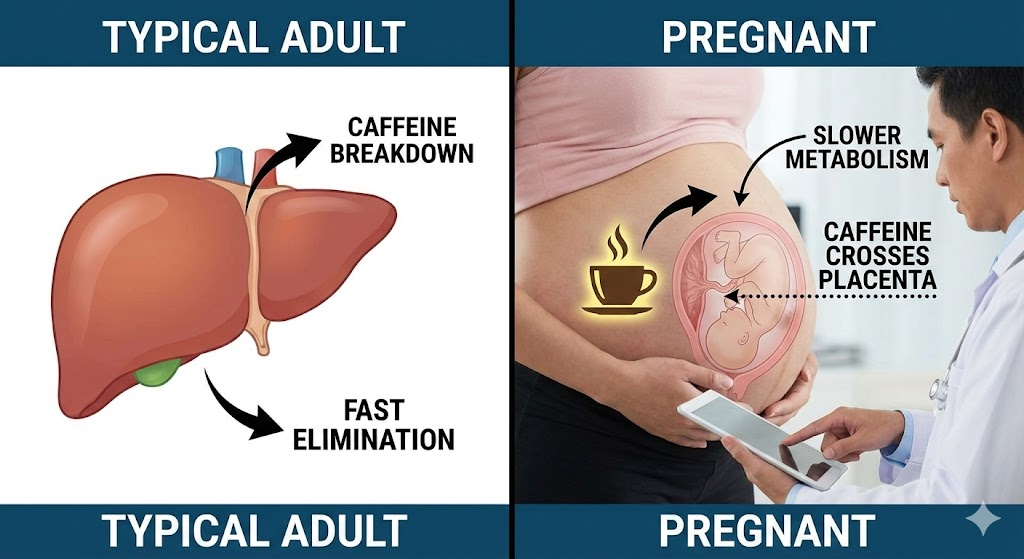
Graphic comparing caffeine metabolism in typical adults vs pregnancy, showing slower breakdown and caffeine crossing the placenta

Safety limits depend on what happens after you take a sip. In a typical adult, the liver works efficiently. It produces enzymes that break caffeine down, use the energy, and flush the rest. The system is fast.


Pregnancy changes the rules. As the weeks go by, metabolism slows down. The body takes much longer to process caffeine. By the third trimester, the chemical stays in the blood nearly three times longer than normal.


The placenta adds another layer of complexity. It acts as a gateway. Caffeine crosses it easily, moving from mother to baby. The developing fetus doesn’t have the liver enzymes to handle it. It relies entirely on the mother’s system to clear the drug. When the mother’s metabolism is slowed by coffee during pregnancy, the baby ends up exposed to caffeine for hours. That prolonged exposure is what doctors watch, as it can influence fetal heart rate.


The 200mg Threshold

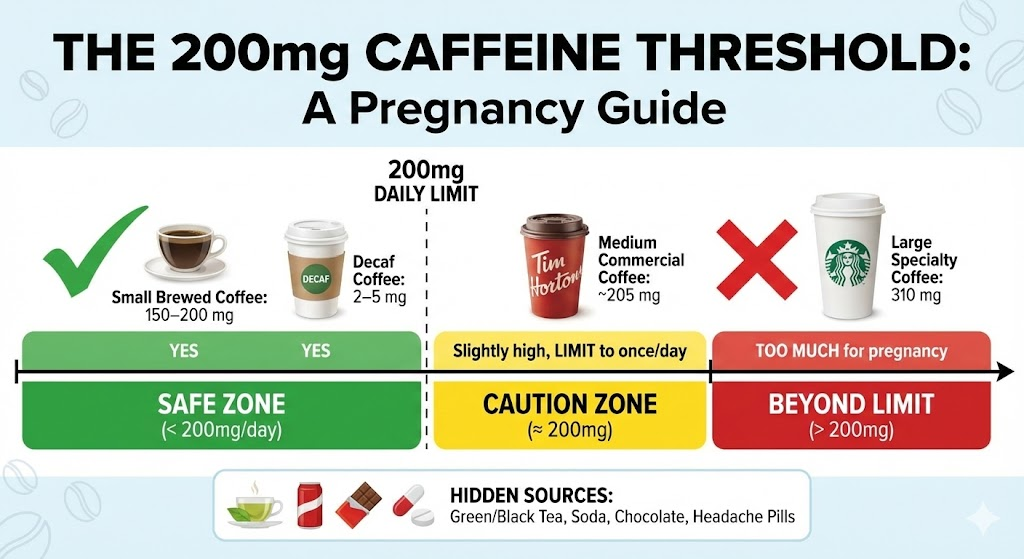
Pregnancy caffeine chart showing 200mg daily limit with safe, caution, and beyond-limit coffee examples

So, is coffee safe in pregnancy? Medical consensus says yes. But there’s a catch. Limits matter.


Most obstetrics organizations set the line at 200 milligrams a day. Staying under this number generally avoids the risks linked to complications like preterm birth. Practically, 200mg is about one standard 12-ounce cup brewed at home.


The definition of a cup is the problem. A medium roast from a drive-through on Derry Road isn’t standardized. Some large commercial coffees pack over 300mg into a single serving. One drink pushes you past the safety zone before noon. Also, caffeine in pregnancy hides in other places. Green tea, black tea, soda, chocolate, headache pills, they all count. Swap coffee for five cups of tea, and the total intake might actually go up.


Most Mississauga doctors including those at family clinics and walk-in clinics near Square One, give patients the same guideline: one cup of coffee per day is generally safe.


Here’s what that looks like:

Coffee Type Approx. Caffeine Safe?
1 small brewed coffee 150–200 mg Yes
1 medium Tim Hortons coffee ~205 mg Slightly high, limit to once/day
1 Starbucks Grande 310 mg Too much for pregnancy
Decaf coffee 2–5 mg Safe

If you love cafe style coffee, be mindful: specialty drinks often contain more caffeine than you think.


The Miscarriage Question

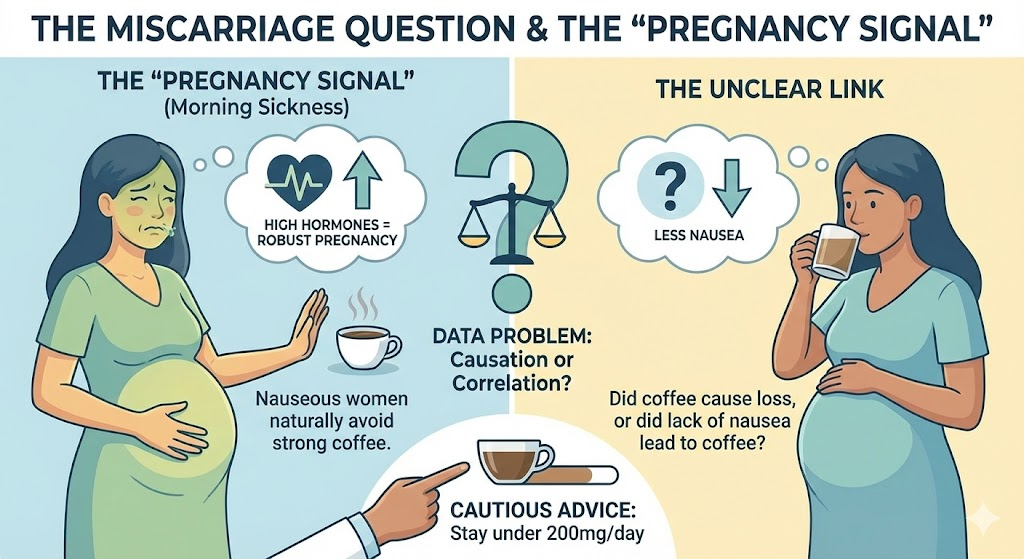
Illustration explaining miscarriage and coffee research, showing morning sickness as a pregnancy signal and advising under 200mg caffeine daily

Fear of pregnancy loss drives most of the anxiety. We’ve been told for years that coffee causes miscarriages. The data is messier than that.


Some studies featuring coffee during pregnancy do link high intake to loss. But researchers have found a statistical quirk called the pregnancy signal. Morning sickness usually means hormone levels are high and the pregnancy is robust. Nauseous women naturally stop drinking strong coffee.


This creates a data problem. It leaves a big question mark, were miscarriages caused by the coffee itself, or did those women simply keep drinking it because they never developed strong pregnancy nausea? Right now, the research can’t clearly separate the two. That’s why the advice stays cautious. Trying not to exceed 200mg is the safest bet. 


Growth and Birth Weight

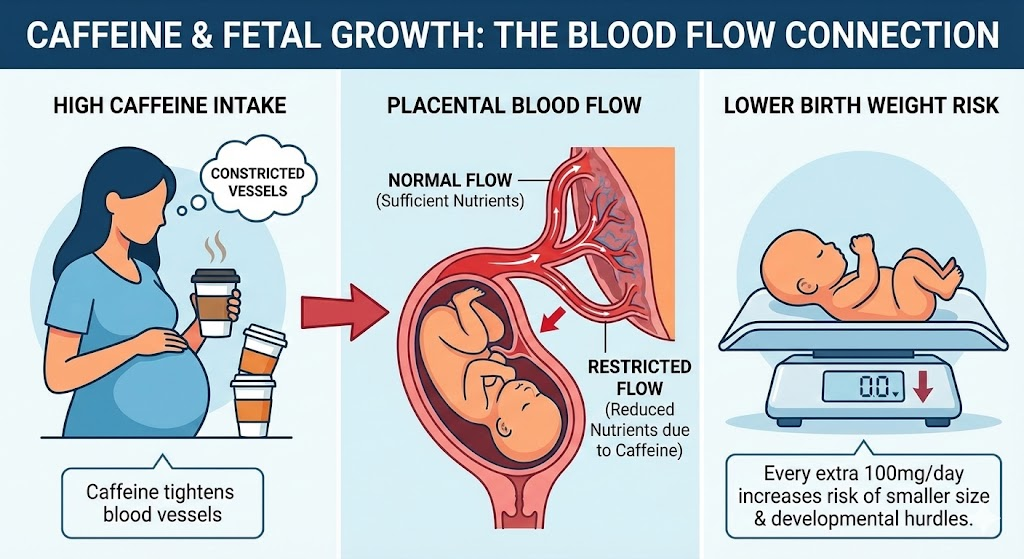
Infographic showing how high caffeine intake may restrict placental blood flow and increase risk of lower birth weight in babies

The link to birth weight is clearer. Evidence from different research groups points in the same direction: high caffeine habits aren’t ideal for fetal growth. Because caffeine tightens blood vessels, due to which the placenta receives slightly less blood flow. With every extra 100 mg a day, the odds of affecting fetous growth increase.


Every extra 100mg of daily caffeine raises the risk of a lower birth weight. A slightly smaller baby isn’t always a crisis. But low birth weight can signal other developmental hurdles. 


Finding Local Support


Navigating these choices is part of prenatal care Mississauga offers. Every pregnancy is different. A mom with high blood pressure gets different advice than one with low pressure. Generic web searches can’t account for that.


Finding doctors in Mississauga who accept new patients is tough. Waitlists are long. But don’t wait for a permanent family doctor to get answers. A walk-in clinic in the Mississauga facility can fill the gap. These clinics verify pregnancies, offer initial advice on diet, and handle referrals. They are a solid starting point.


Good Women’s Health Care means making decisions based on your health history, not just rules you read online.


Cutting Back Without Misery

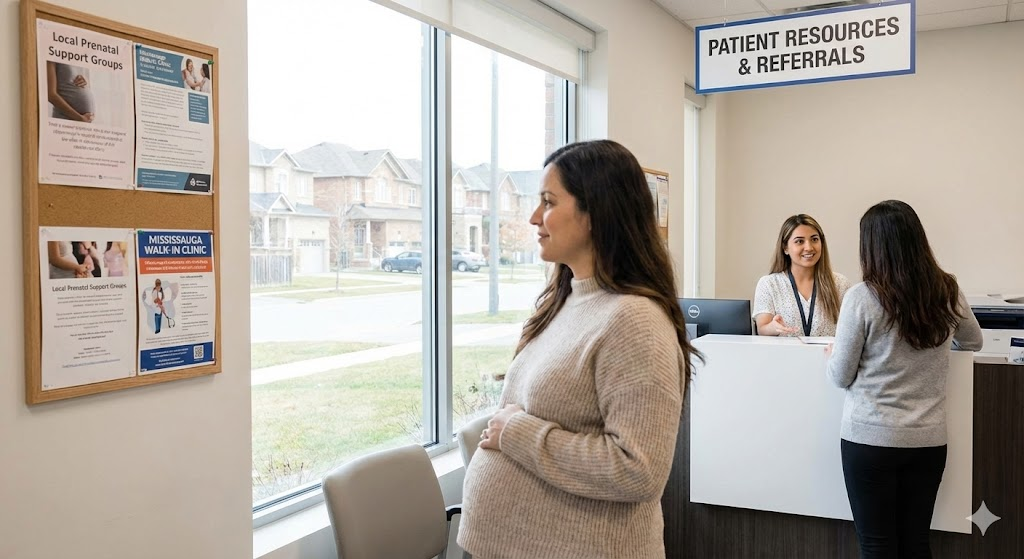
Pregnant woman visiting a Mississauga walk-in clinic reception desk with patient resources and referrals sign

For the woman who runs on three espressos a day, the 200mg limit sounds painful. Withdrawal headaches and irritability are the last things you need when you’re already tired. 


Don’t quit cold turkey. It usually fails. Try dilution. Mix half decaf and half regular beans. You keep the ritual of two cups, but reduce the caffeine in half. Or switch to lattes. A latte is mostly milk. You get calcium and protein, with a much smaller volume of coffee.


Hydration matters too. Pregnancy demands huge amounts of water. Often, that 3 PM crash is dehydration, not a caffeine deficit. Drinking a glass of water before reaching for the mug can fix the energy slump.


Local Resources for Expectant Mothers

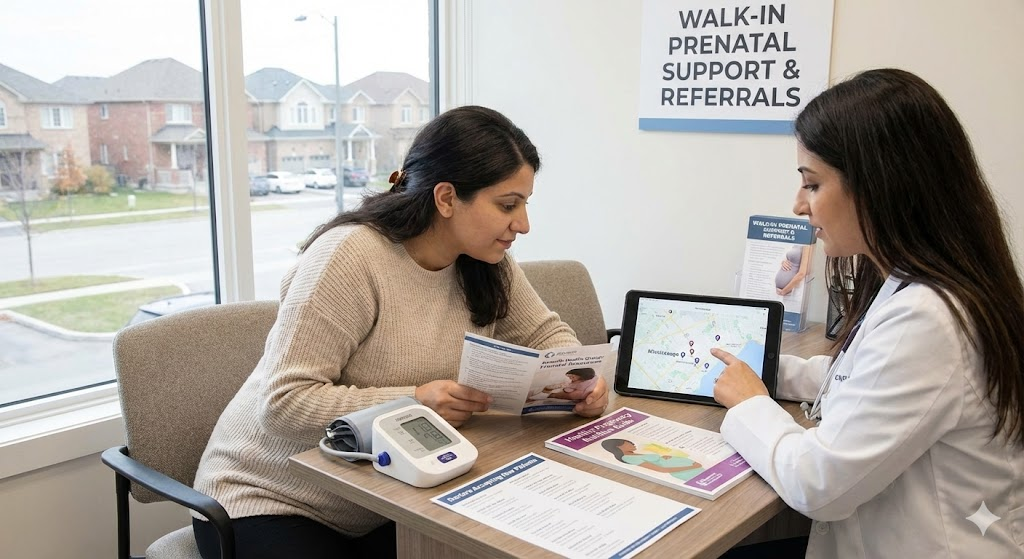
Doctor guiding pregnant patient with walk-in prenatal support and referrals, showing clinic locations on a tablet

Pregnancy nutrition advice differs for every women. In Mississauga, prenatal teams look at each person’s full health picture before giving guidance. Someone with high blood pressure, for example, will be coached differently than someone whose readings run low, which is why broad online tips can only take you so far.


If you’re searching for doctors in Mississauga accepting new patients, there are multiple family practices available across the city. Women should not wait until they have a permanent family doctor to seek advice. A walk-in clinic, Mississauga facility like Aboudh Health Group can often bridge the gap. These clinics can confirm pregnancy, offer initial counseling on diet and medications. Also, further help with referrals to obstetricians.


Connect with our  Mississauga prenatal care provider today


Questions about coffee, diet, and “what’s still safe” in pregnancy rarely come with simple yes‑or‑no answers. That’s exactly where Aboudh Health Group steps in. Instead of leaving patients to sort through mixed messages online, the team takes time to look at the full picture. Starting from medical history, blood pressure, symptoms, and everyday routines, before offering practical guidance.


Aboudh Health Group focuses on clear explanations and realistic plans. From reviewing caffeine habits to shaping a complete prenatal care strategy, the goal is always the same. Healthy pregnancies, confident decisions, and support that feels personal.


For patients who want more than a quick search result, booking a visit with Aboudh Health Group offers a chance to interactwith our professionals and look forward to a healthy growing foetus.

Faqs

Most doctors consider up to about 200 mg of caffeine a day (roughly one regular cup of coffee) safe for a healthy pregnancy, as long as total caffeine from tea, soda, energy drinks, and chocolate is also counted.

Caffeine crosses the placenta and stays in a baby’s system much longer than in an adult. Because it narrows blood vessels slightly, it can reduce the flow of oxygen and nutrients reaching the placenta when intake is high.

High daily caffeine intake has been linked in some studies to a higher risk of miscarriage and lower birth weight, especially above 300 mg a day. Keeping intake under 200 mg is generally recommended to stay on the safe side.

Most people do not need to quit entirely. Many women switch to smaller cups, half‑caf, or decaf so they can still enjoy the routine while staying within the recommended daily limit and supporting healthy fetal growth.

Questions about coffee, medications, and diet in pregnancy are best reviewed with a prenatal provider. A family doctor, OB‑GYN, prenatal care Mississauga clinic, or a walk-in clinic Mississauga location can review your specific health history and give personalized guidance.